Introduction
A Hotel General Manager (GM) is the backbone of every successful hotel. While guests often notice luxurious rooms, delicious food, or friendly staff, the real force working behind the scenes is the General Manager. Every department—from Front Office and Housekeeping to Kitchen, Food & Beverage, Engineering, Sales, and Human Resources—depends on the GM’s leadership and decision-making.
Today’s hospitality industry is changing faster than ever. Guest expectations continue to grow, technology is transforming hotel operations, online reviews influence bookings, and sustainability has become an important business priority. Modern General Managers must combine leadership, business knowledge, emotional intelligence, and innovation to keep their hotels competitive.
A successful GM does much more than solve daily problems. They build a positive workplace, improve guest satisfaction, increase profitability, train future leaders, and create systems that help every department perform efficiently.
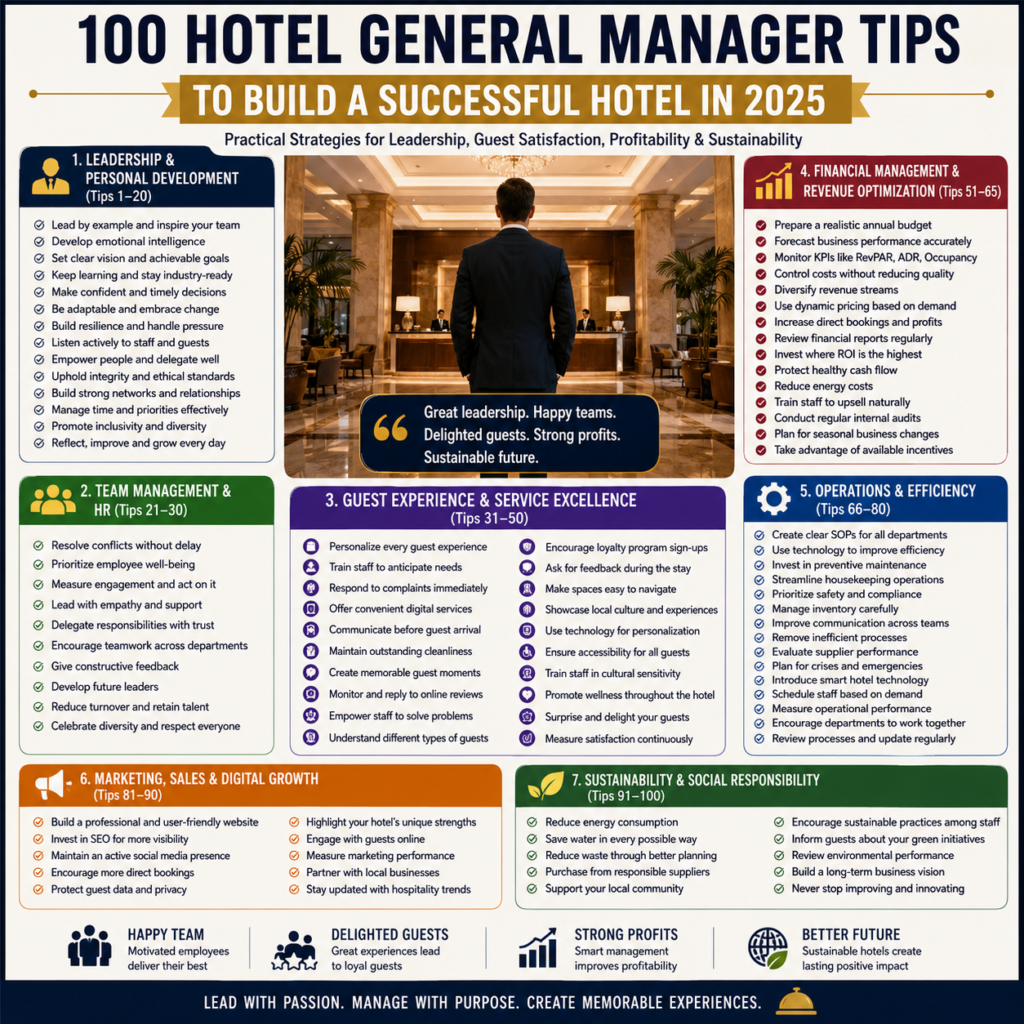
This comprehensive guide shares 100 practical Hotel General Manager tips based on real hospitality management principles. Whether you manage a luxury hotel, boutique property, business hotel, resort, or budget accommodation, these ideas will help strengthen your leadership skills and improve overall hotel performance.
Section 1: Leadership and Personal Development
1. Lead by Example
Employees carefully observe how their General Manager behaves every day. Arriving on time, respecting everyone equally, following hotel policies, maintaining professionalism, and helping during busy situations inspire employees to do the same. Strong leadership begins with actions rather than words, creating a culture where accountability becomes a shared responsibility throughout the hotel.
2. Build Emotional Intelligence
Managing a hotel means working with people from different cultures, personalities, and backgrounds. A successful GM understands emotions, remains calm during stressful situations, and responds thoughtfully instead of reacting emotionally. Emotional intelligence improves communication, strengthens relationships, reduces workplace conflicts, and creates a supportive environment where employees feel respected and motivated.
3. Create a Clear Vision
Every hotel should have clear goals that every department understands. Whether improving guest satisfaction, increasing occupancy, or reducing operational costs, employees perform better when they know the direction. Share objectives regularly during meetings so every team member understands how their daily work contributes to the hotel’s long-term success.
4. Never Stop Learning
Hospitality trends change continuously. New technologies, guest expectations, digital marketing strategies, and operational practices require constant learning. Read industry publications, attend seminars, complete professional certifications, and learn from experienced leaders. Continuous education keeps your knowledge current and helps your hotel remain competitive in an evolving market.
5. Improve Decision-Making Skills
General Managers make hundreds of decisions every week. Some are routine, while others affect the hotel’s reputation or profitability. Gather accurate information, evaluate possible outcomes, consult department heads when needed, and make confident decisions without unnecessary delays. Good decisions build trust and ensure smoother hotel operations.
6. Stay Flexible During Change
Unexpected situations happen in every hotel. Staff shortages, guest complaints, equipment failures, changing market conditions, or emergency situations require quick adaptation. A flexible General Manager remains solution-focused instead of becoming frustrated. Adaptability helps the hotel recover quickly while maintaining excellent guest service and operational stability.
7. Maintain a Healthy Work-Life Balance
Hotel management often involves long working hours. However, constant overwork eventually reduces productivity and decision-making ability. Delegate responsibilities, trust department managers, schedule personal time, and prioritize physical and mental health. A balanced leader has greater energy, patience, and focus for handling business challenges effectively.
8. Develop Mental Resilience
Every hotel experiences difficult periods, including low occupancy, operational issues, guest complaints, or unexpected crises. Strong General Managers remain calm under pressure and focus on finding practical solutions instead of blaming others. Resilience allows leaders to recover from setbacks, motivate employees, and maintain confidence throughout challenging situations.
9. Listen Before You Speak
Many valuable ideas come directly from frontline employees because they interact with guests every day. Encourage staff to share feedback, suggestions, and concerns without fear. Active listening improves trust, uncovers hidden operational problems, and often leads to innovative solutions that enhance both guest satisfaction and workplace efficiency.
10. Empower Your Team
Successful hotels do not depend entirely on one person. Give department managers and supervisors authority to solve routine issues independently. Empowered employees become more confident, make faster decisions, and take greater ownership of their responsibilities. Delegation also allows the General Manager to focus on strategic planning and business growth.
11. Always Act with Integrity
Trust is one of the most valuable qualities a General Manager can possess. Be honest with guests, employees, suppliers, and hotel owners. Keep promises, follow ethical business practices, and make fair decisions regardless of personal preferences. Integrity builds credibility and strengthens long-term professional relationships across the organization.
12. Build a Strong Professional Network
Networking provides opportunities to learn from experienced professionals and discover new business ideas. Connect with hotel associations, tourism organizations, suppliers, consultants, and fellow General Managers. Strong professional relationships often lead to partnerships, better vendor negotiations, recruitment opportunities, and valuable industry knowledge that benefits your hotel.
13. Master Time Management
A General Manager’s schedule can become overwhelming without proper planning. Prioritize high-impact tasks, schedule meetings efficiently, minimize unnecessary interruptions, and use digital planning tools. Effective time management ensures important responsibilities receive proper attention while preventing daily operational issues from consuming the entire workday.
14. Promote Diversity and Inclusion
Hotels welcome guests from every culture and employ people with diverse backgrounds. Foster a workplace where everyone feels respected regardless of nationality, religion, gender, age, or experience. Inclusive teams communicate better, generate creative ideas, and provide warmer hospitality that appeals to international travelers and local guests alike.
15. Evaluate Yourself Regularly
Great leaders continuously improve themselves. Review your leadership style, communication skills, financial decisions, and operational performance honestly. Request feedback from department heads and senior staff. Self-evaluation helps identify weaknesses early, allowing continuous personal development that positively impacts hotel operations and employee confidence.
Section 2: Team Management and Human Resources
16. Hire People Who Match Your Hotel Culture
Technical skills can be taught, but attitude is much harder to change. During recruitment, evaluate whether candidates share your hotel’s service philosophy, teamwork values, and commitment to guest satisfaction. Employees who fit the organization’s culture usually adapt faster, stay longer, and contribute positively to workplace morale.
17. Provide Excellent Onboarding
A structured onboarding process helps new employees understand hotel standards, departmental procedures, safety policies, and service expectations. Assign mentors, introduce team members, and provide practical training from the beginning. A positive first experience improves confidence, reduces mistakes, and increases employee retention during the critical early months.
18. Invest in Continuous Staff Training
Learning should never stop after orientation. Organize regular workshops, cross-training sessions, customer service programs, and leadership development activities. Continuous training improves employee confidence, increases productivity, enhances service consistency, and prepares staff to handle changing guest expectations with professionalism and efficiency.
19. Recognize Outstanding Performance
Employees appreciate genuine recognition for their hard work. Celebrate achievements through appreciation certificates, employee awards, public praise, incentives, or career advancement opportunities. Recognition increases motivation, encourages healthy competition, improves retention, and creates a workplace where employees feel valued for their contributions.
20. Encourage Open Communication
Employees should feel comfortable discussing challenges, ideas, or concerns with management. Maintain an open-door policy, conduct regular departmental meetings, and encourage honest conversations. Transparent communication reduces misunderstandings, strengthens teamwork, resolves problems quickly, and creates a culture built on trust and mutual respect.
Section 3: Guest Experience and Service Excellence (Continued)
41. Encourage Guests to Join Your Loyalty Program
Loyalty programs are one of the most effective ways to increase repeat business. Explain the benefits clearly during check-in or booking, such as room upgrades, exclusive discounts, or reward points. A satisfied returning guest is often more valuable than constantly acquiring new customers through expensive marketing campaigns.
42. Ask for Feedback During the Stay
Many hotels only request reviews after guests leave, but valuable improvements can be made while they are still on the property. Contact guests during their stay to ask about their experience. Solving concerns immediately increases satisfaction and reduces the chance of negative online reviews later.
43. Make Hotel Spaces Easy to Navigate
Guests should never feel confused while moving around the property. Clear signs, logical layouts, proper lighting, and well-maintained public areas improve convenience and reduce unnecessary questions. Comfortable, easy-to-use spaces create a relaxing environment and enhance the overall guest experience from arrival to departure.
44. Showcase Local Culture
Modern travelers enjoy authentic experiences that connect them with the destination. Introduce local cuisine, regional artwork, traditional music, or partnerships with nearby attractions. Supporting local businesses not only enriches the guest experience but also strengthens the hotel’s relationship with the surrounding community.
45. Use Technology to Personalize Service
Technology can help employees deliver more personalized hospitality. Reservation history, guest preferences, and previous feedback allow staff to recommend suitable rooms, dining options, or additional services. When technology supports genuine human interaction, guests receive more thoughtful and memorable experiences.
46. Ensure Accessibility for Every Guest
A welcoming hotel should accommodate guests with different physical abilities and special requirements. Accessible entrances, elevators, bathrooms, parking spaces, and clear communication make travel easier for everyone. Inclusive hospitality demonstrates professionalism while expanding the hotel’s appeal to a wider range of travelers.
47. Train Staff to Respect Cultural Differences
Hotels welcome guests from around the world, each with unique customs and expectations. Provide regular training on cultural awareness, respectful communication, and international etiquette. Employees who understand different traditions create a welcoming atmosphere that makes every guest feel comfortable and appreciated.
48. Promote Wellness Throughout the Hotel
Many travelers prioritize health during their trips. Offer nutritious menu options, maintain a clean fitness center, provide relaxing spa services, and encourage healthy lifestyle choices. Even small wellness initiatives can improve guest satisfaction while helping your hotel stand out in a competitive market.
49. Surprise Guests with Thoughtful Gestures
Unexpected acts of kindness leave lasting memories. A handwritten welcome card, complimentary dessert, birthday decoration, or room upgrade can transform an ordinary stay into an unforgettable experience. Personalized surprises often generate positive online reviews and encourage guests to recommend your hotel to others.
50. Measure Guest Satisfaction Continuously
Guest satisfaction should be tracked using reliable performance indicators rather than assumptions. Monitor review scores, repeat bookings, complaint trends, survey responses, and recommendation rates. Analyzing this information helps identify strengths, correct weaknesses, and continuously improve service quality across every department.
Section 4: Financial Management and Revenue Optimization
51. Prepare a Realistic Annual Budget
A detailed budget serves as the financial roadmap for the hotel. Estimate expected income, operating expenses, payroll, maintenance costs, and capital investments carefully. Involving department heads during budget preparation creates realistic financial targets and encourages accountability throughout the organization.
52. Forecast Business Performance Accurately
Successful planning depends on reliable forecasting. Study historical occupancy, seasonal demand, local events, market trends, and booking patterns to predict future revenue. Accurate forecasts allow managers to adjust staffing, inventory, and pricing strategies before business conditions change.
53. Monitor Key Performance Indicators Every Day
Numbers tell the true story of hotel performance. Track important indicators such as occupancy percentage, average daily rate, revenue per available room, guest satisfaction, labor cost, and food cost regularly. Reviewing these figures daily helps management identify problems before they become major financial challenges.
54. Control Expenses Without Reducing Quality
Cost control does not mean offering poor service. Review purchasing practices, reduce unnecessary waste, negotiate better supplier agreements, and improve operational efficiency. Smart financial management protects profitability while maintaining the high service standards guests expect from your property.
55. Create Multiple Revenue Sources
Hotels should not rely solely on room sales. Increase revenue through restaurants, banquets, conferences, spa services, laundry, airport transfers, recreational activities, and special events. Diversifying income helps stabilize cash flow, especially during periods of lower room occupancy.
56. Adjust Room Rates Based on Demand
Fixed pricing often leads to missed opportunities. Use demand forecasting, local events, competitor analysis, and seasonal trends to adjust room rates appropriately. Dynamic pricing helps maximize revenue during busy periods while remaining competitive when market demand slows.
57. Increase Direct Hotel Bookings
Direct bookings reduce commission costs paid to online travel agencies. Improve your hotel website, offer exclusive packages, provide flexible cancellation policies, and reward direct customers with additional benefits. Strong direct booking strategies increase profitability while strengthening relationships with guests.
58. Review Financial Reports Carefully
Monthly financial reports provide valuable insights into business performance. Analyze revenue, operating expenses, payroll, departmental profits, and budget comparisons regularly. Understanding financial reports allows General Managers to make informed business decisions and identify opportunities for improvement before financial issues become serious.
59. Invest Where the Return Is Highest
Every investment should contribute measurable value to the hotel. Prioritize projects that improve guest satisfaction, increase operational efficiency, reduce long-term expenses, or generate additional revenue. Careful investment planning ensures that available resources create sustainable business growth rather than unnecessary spending.
60. Protect Healthy Cash Flow
Even profitable hotels can experience financial difficulties if cash flow is poorly managed. Monitor receivables, control payment schedules, maintain emergency reserves, and plan major expenses carefully. Healthy cash flow ensures smooth daily operations and provides financial stability during unexpected business challenges.
Section 4: Financial Management and Revenue Optimization (Continued)
61. Reduce Energy Costs Through Smart Management
Utility expenses can significantly affect hotel profitability. Regularly inspect lighting, air conditioning, heating systems, and kitchen equipment to ensure they operate efficiently. Replace outdated equipment with energy-saving alternatives whenever possible. Lower energy consumption reduces operating costs while supporting environmentally responsible business practices that many modern travelers appreciate.
62. Train Employees to Upsell Naturally
Upselling should always focus on improving the guest experience rather than simply increasing revenue. Teach employees to recommend room upgrades, dining packages, spa treatments, airport transfers, or local experiences that genuinely match guest needs. Helpful recommendations increase guest satisfaction while generating additional income for the hotel.
63. Conduct Regular Internal Audits
Routine audits help identify operational weaknesses before they become expensive problems. Review financial records, inventory, safety procedures, purchasing practices, and departmental compliance on a regular schedule. Internal audits improve accountability, reduce the risk of fraud, and ensure hotel policies are consistently followed across every department.
64. Prepare for Seasonal Business Changes
Hotel demand often fluctuates throughout the year. Analyze historical occupancy patterns and local events to anticipate busy and slow seasons. Adjust staffing levels, marketing campaigns, purchasing plans, and maintenance schedules accordingly. Proper seasonal planning allows the hotel to remain profitable despite changing market conditions.
65. Take Advantage of Available Business Incentives
Many regions offer financial incentives for environmentally friendly upgrades, employee training, tourism development, or energy-efficient investments. Stay informed about government programs and industry initiatives that could reduce operational expenses or support future hotel improvements without placing additional pressure on the operating budget.
Section 5: Hotel Operations and Efficiency
66. Develop Clear Standard Operating Procedures (SOPs)
Well-documented Standard Operating Procedures help employees perform tasks consistently regardless of experience level. Every department should have clear instructions covering daily operations, emergency procedures, service standards, and quality expectations. Updated SOPs reduce mistakes, simplify training, and ensure guests receive the same high-quality service every time.
67. Use Hotel Technology to Improve Efficiency
Modern hotel software simplifies many daily responsibilities. Property Management Systems, digital housekeeping tools, maintenance tracking, and automated reporting reduce paperwork while improving accuracy. Technology should support employees rather than replace personal hospitality, allowing staff to spend more time serving guests and less time handling repetitive administrative work.
68. Invest in Preventive Maintenance
Waiting until equipment fails often leads to expensive repairs and guest dissatisfaction. Schedule regular inspections for elevators, air conditioning systems, plumbing, electrical equipment, kitchen appliances, and guest room facilities. Preventive maintenance extends equipment life, reduces emergency repairs, and ensures uninterrupted hotel operations throughout the year.
69. Improve Housekeeping Productivity
Housekeeping directly influences guest satisfaction. Organize cleaning schedules efficiently, maintain sufficient linen supplies, inspect rooms regularly, and provide proper equipment for staff. Efficient housekeeping operations improve room availability, maintain cleanliness standards, reduce employee fatigue, and help guests enjoy consistently comfortable accommodations.
70. Prioritize Safety Throughout the Hotel
Guest and employee safety should always remain a top management priority. Conduct regular fire drills, inspect emergency exits, maintain security systems, and train employees to respond effectively during emergencies. A safe hotel protects people, strengthens guest confidence, and reduces operational risks that could affect the business.
71. Manage Inventory Carefully
Poor inventory management often results in unnecessary expenses or operational delays. Track food supplies, guest amenities, cleaning materials, maintenance equipment, and office supplies using organized inventory systems. Regular stock reviews prevent shortages, reduce waste, and ensure departments always have the resources needed to deliver excellent service.
72. Improve Communication Between Departments
Excellent guest experiences require smooth coordination between every hotel department. Hold regular operational meetings, encourage information sharing, and establish clear communication channels. Strong cooperation reduces misunderstandings, prevents service delays, and ensures departments work together instead of operating independently.
73. Remove Inefficient Processes
Every unnecessary step increases operational costs and wastes employee time. Regularly review hotel procedures to identify repetitive tasks, paperwork, or outdated systems that no longer add value. Simplifying operations improves productivity, reduces employee frustration, and allows staff to focus more on guest satisfaction.
74. Evaluate Supplier Performance Regularly
Reliable suppliers contribute directly to hotel quality. Monitor product quality, delivery times, pricing, customer service, and contract compliance before renewing agreements. Building strong relationships with dependable suppliers ensures consistent service standards while helping the hotel control purchasing costs over the long term.
75. Create a Comprehensive Crisis Management Plan
Unexpected situations such as natural disasters, medical emergencies, cyberattacks, equipment failures, or public health concerns require immediate action. Prepare written emergency procedures, assign responsibilities clearly, and conduct regular training exercises. A well-prepared team responds confidently, minimizing disruption while protecting guests, employees, and hotel operations.
76. Introduce Smart Hotel Technology Carefully
Smart room controls, energy management systems, digital concierge services, and automated maintenance monitoring can improve efficiency without reducing personalized hospitality. Choose technology that genuinely enhances the guest experience and simplifies employee responsibilities rather than adding unnecessary complexity to daily hotel operations.
77. Schedule Employees Based on Business Demand
Efficient scheduling balances excellent service with responsible labor costs. Analyze occupancy forecasts, event calendars, and seasonal demand before creating work schedules. Matching staffing levels to expected business volume ensures guests receive prompt service while preventing unnecessary payroll expenses during quieter periods.
78. Measure Operational Performance Regularly
Successful General Managers rely on measurable data rather than assumptions. Track housekeeping productivity, maintenance response times, guest complaints, check-in efficiency, food preparation times, and other operational indicators. Performance measurement highlights improvement opportunities and supports informed management decisions across every department.
79. Encourage Departments to Work Toward Shared Goals
Instead of focusing only on individual departmental targets, create hotel-wide objectives that encourage collaboration. Shared goals strengthen teamwork, improve communication, and help employees understand how their work contributes to the hotel’s overall success. Unified teams consistently deliver better guest experiences and stronger financial results.
80. Review Operational Procedures Every Year
Hospitality continues to evolve through changing guest expectations, technology, and industry standards. Review policies, procedures, and service standards annually to ensure they remain effective and relevant. Continuous improvement keeps the hotel competitive while helping employees adapt confidently to new challenges and opportunities.
Section 6: Marketing, Sales and Digital Growth
81. Build a Professional Hotel Website
Your hotel website is often the first impression potential guests receive. Ensure it loads quickly, works smoothly on mobile devices, provides accurate information, displays high-quality photographs, and offers a simple booking process. A professional website increases trust and encourages more direct reservations without relying entirely on third-party booking platforms.
82. Invest in Search Engine Optimization (SEO)
Many travelers search online before choosing accommodation. Optimize your website with helpful content, local keywords, fast loading speed, and structured information. Publishing useful blogs about local attractions, travel tips, and hotel services helps improve search rankings while bringing valuable organic traffic to your website.
83. Maintain an Active Social Media Presence
Social media allows hotels to connect directly with guests before, during, and after their stay. Share authentic behind-the-scenes content, guest experiences, seasonal offers, staff achievements, and local events. Consistent engagement strengthens brand awareness and builds stronger relationships with both existing and potential guests.
84. Encourage More Direct Bookings
Direct bookings improve profitability by reducing commission expenses. Offer exclusive discounts, complimentary breakfast, flexible cancellation policies, or room upgrades for guests who book through your official website. These additional benefits encourage customers to choose your hotel directly instead of using third-party booking channels.
85. Protect Guest Information Responsibly
Guest trust depends on how their personal information is handled. Store reservation details securely, follow applicable privacy regulations, and never misuse customer data for unnecessary marketing. Responsible data management strengthens your hotel’s reputation and demonstrates professionalism in today’s digital business environment.
86. Highlight Your Hotel’s Unique Strengths
Every hotel has something special to offer. It could be exceptional service, outstanding dining, scenic views, heritage architecture, luxury facilities, or a convenient location. Clearly communicate these unique advantages across your marketing materials so guests understand why they should choose your property over competitors.
87. Engage with Guests Online
Reply professionally to comments, questions, reviews, and messages across digital platforms. Quick and respectful responses demonstrate that your hotel values customer feedback. Active online engagement also improves public perception and encourages potential guests to trust your commitment to excellent customer service.
88. Measure Marketing Performance
Every marketing campaign should produce measurable results. Track website traffic, booking conversions, advertising costs, email campaign performance, and social media engagement. Reviewing performance data helps identify successful strategies while allowing the hotel to improve future marketing investments.
89. Partner with Local Businesses
Working together with local restaurants, travel agencies, transport providers, cultural organizations, and tourist attractions creates additional value for guests. These partnerships generate referral opportunities, strengthen community relationships, and provide visitors with authentic local experiences that enhance their overall stay.
90. Stay Updated with Hospitality Trends
Guest expectations continue to evolve. Follow industry developments such as artificial intelligence, digital concierge services, sustainable tourism, wellness travel, and changing consumer preferences. Keeping your hotel aligned with modern trends ensures continued competitiveness in an increasingly dynamic hospitality market.
Section 7: Sustainability and Social Responsibility
91. Reduce Energy Consumption
Energy efficiency benefits both the environment and hotel profitability. Replace traditional lighting with LED fixtures, install energy-efficient appliances, maintain HVAC systems regularly, and encourage responsible energy use among employees. Lower energy consumption reduces operating expenses while supporting environmentally responsible hospitality.
92. Save Water Wherever Possible
Water conservation should become part of daily hotel operations. Install water-saving fixtures, repair leaks immediately, monitor consumption, and encourage towel and linen reuse programs where appropriate. Responsible water management protects natural resources while lowering utility expenses without compromising guest comfort.
93. Reduce Waste Through Better Planning
Food waste, plastic waste, and unnecessary packaging increase operational costs and environmental impact. Improve purchasing accuracy, recycle whenever possible, compost organic waste, and encourage reusable alternatives throughout the hotel. Small improvements made consistently can significantly reduce waste over time.
94. Purchase from Responsible Suppliers
Choose suppliers who provide quality products while following ethical and environmentally responsible practices. Whenever possible, support local farmers, manufacturers, and businesses. Responsible sourcing strengthens community relationships, reduces transportation impact, and often improves product freshness and reliability.
95. Support Your Local Community
Hotels become stronger when the surrounding community also benefits. Participate in local charity events, educational programs, environmental campaigns, and tourism initiatives. Community involvement builds goodwill, enhances your hotel’s reputation, and creates stronger long-term relationships with local residents and organizations.
96. Encourage Sustainable Practices Among Employees
Environmental responsibility begins with staff awareness. Train employees on recycling, energy conservation, water management, and waste reduction. Encourage practical suggestions from every department. When sustainability becomes part of workplace culture, positive habits naturally become part of daily hotel operations.
97. Inform Guests About Your Green Initiatives
Many travelers appreciate environmentally responsible accommodation. Share your sustainability efforts through in-room information, digital communication, or hotel signage. Explain how guests can participate by conserving water, reducing waste, or supporting local initiatives without making them feel pressured.
98. Review Environmental Performance Regularly
Measure electricity consumption, water usage, recycling rates, and waste generation on a regular basis. Reviewing environmental performance helps management identify areas for improvement and measure the success of sustainability initiatives implemented throughout the property.
99. Build a Long-Term Business Vision
A successful General Manager plans beyond today’s occupancy numbers. Establish long-term objectives covering guest satisfaction, employee development, financial growth, technology investment, sustainability, and brand reputation. A clear vision helps every department move toward shared business goals with confidence.
100. Never Stop Improving
Hospitality excellence is a continuous journey rather than a final destination. Encourage innovation, welcome feedback, study industry developments, and remain open to change. Hotels that consistently improve their services, operations, and leadership are the ones that build lasting success in an increasingly competitive industry.
Frequently Asked Questions (FAQs)
1. What is the primary responsibility of a Hotel General Manager?
A Hotel General Manager oversees all hotel operations, including guest service, financial performance, employee management, sales, marketing, maintenance, and overall business strategy. Their goal is to ensure smooth operations while maximizing guest satisfaction and profitability.
2. Which leadership skills are most important for a Hotel GM?
Strong communication, decision-making, emotional intelligence, problem-solving, financial management, conflict resolution, adaptability, and team-building are among the most valuable leadership skills for a successful Hotel General Manager.
3. How can a General Manager improve guest satisfaction?
Guest satisfaction improves by delivering personalized service, maintaining high cleanliness standards, responding quickly to complaints, training employees regularly, monitoring online reviews, and continuously collecting guest feedback to improve services.
4. Why is employee training important in hotels?
Well-trained employees work more confidently, make fewer mistakes, provide consistent service, and handle guest requests professionally. Continuous training also improves employee motivation, career development, and overall hotel performance.
5. How does technology help Hotel General Managers?
Modern technology simplifies reservations, housekeeping, maintenance, communication, reporting, revenue management, and guest services. Properly implemented technology improves efficiency while allowing employees to spend more time focusing on guest experiences.
6. Why is sustainability becoming important in hotels?
Many travelers prefer environmentally responsible hotels. Sustainable practices such as energy conservation, water management, recycling, and responsible purchasing reduce operating costs while improving the hotel’s reputation and supporting long-term business growth.
7. What financial indicators should every Hotel GM monitor?
Important performance indicators include occupancy rate, Average Daily Rate (ADR), Revenue Per Available Room (RevPAR), labor cost percentage, food cost, operating profit, guest satisfaction scores, and customer retention rates.
8. How often should hotel operations be reviewed?
Daily operational reviews, weekly departmental meetings, monthly financial analysis, quarterly business evaluations, and annual strategic planning help maintain consistent performance and identify opportunities for continuous improvement.
Conclusion
Being an outstanding Hotel General Manager requires much more than operational knowledge. It demands leadership, financial discipline, effective communication, strategic thinking, and a genuine passion for hospitality. Every decision—from hiring employees and resolving guest concerns to managing budgets and embracing sustainability—plays an important role in the hotel’s long-term success.
The 100 practical tips shared in this guide provide a complete roadmap for building a well-managed, guest-focused, and financially successful hotel. Rather than attempting to implement every idea at once, focus on making consistent improvements in leadership, employee development, guest service, operational efficiency, and business strategy.
Hotels that invest in their people, embrace innovation, adapt to changing traveler expectations, and maintain high service standards are well-positioned to succeed in 2025 and beyond. Continuous learning, responsible management, and a commitment to excellence will not only strengthen your hotel’s reputation but also create memorable experiences that keep guests returning year after year.