Highway Hospitality: The Complete Guide to Success
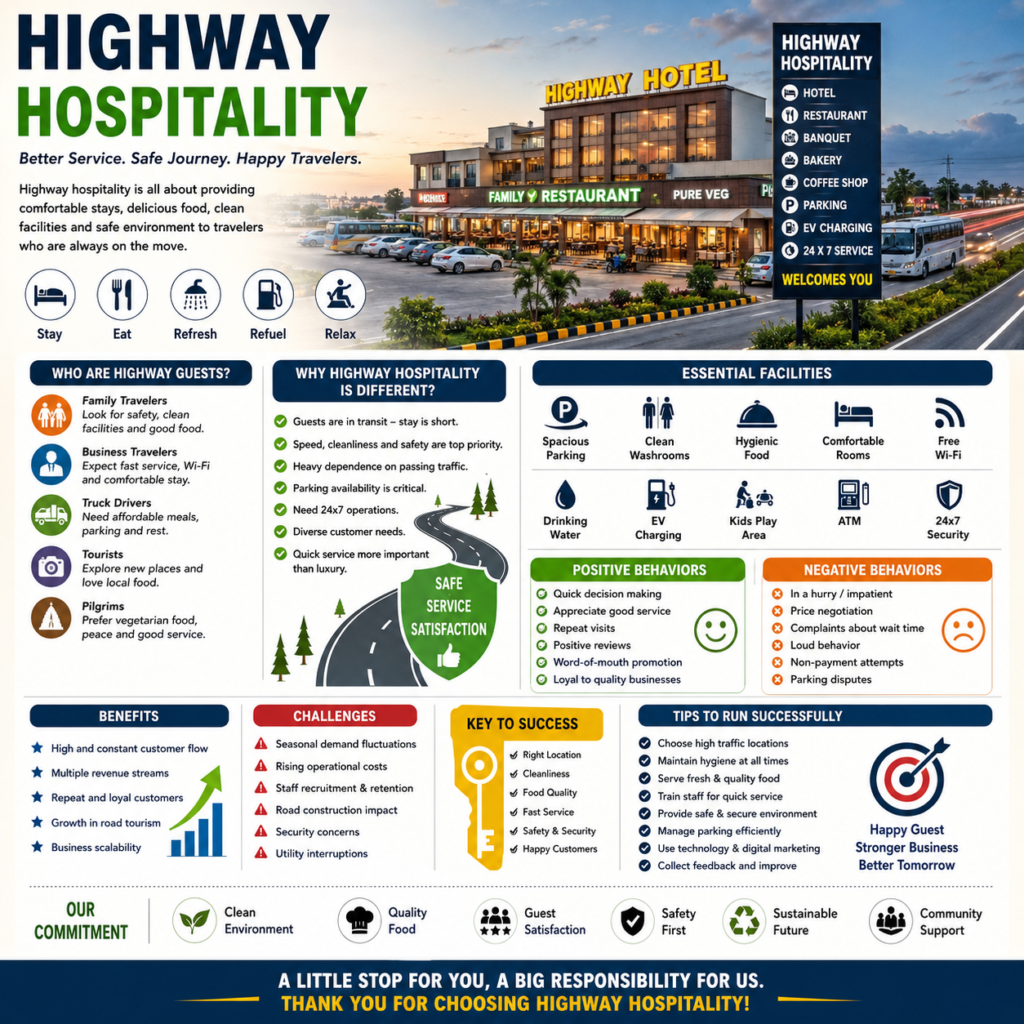
Highway hospitality is a specialized segment of the hospitality industry that focuses on serving travelers, commercial drivers, tourists, families, business professionals, and transport operators who are traveling on highways and expressways. Unlike city hotels, highway hospitality businesses are designed to provide quick, comfortable, safe, and convenient services to guests who are often in transit.
Highway hospitality includes:
- Highway Hotels
- Roadside Motels
- Highway Restaurants
- Family Restaurants
- Food Courts
- Truck Stop Cafés
- Highway Resorts
- Fuel Station Hospitality
- Rest Stops
- Banquet Facilities on Highways
- Travel Convenience Centers
With increasing highway infrastructure and road tourism worldwide, highway hospitality has become one of the fastest-growing sectors in the travel industry. Modern travelers no longer seek only food and fuel—they expect clean washrooms, quality meals, secure parking, Wi-Fi, charging stations, family-friendly spaces, and professional customer service.
Running a successful highway hospitality business requires understanding the unique needs of travelers and delivering consistent service despite unpredictable guest flow.
What is Highway Hospitality?
Highway hospitality refers to hospitality services provided to people traveling by road. The main objective is to offer travelers a comfortable place to rest, eat, refresh, refuel, or stay overnight before continuing their journey.
Unlike urban hotels, highway establishments primarily serve guests who stay for short periods. Speed, convenience, cleanliness, and safety are often more important than luxury.
Typical services include:
- Accommodation
- Restaurants
- Tea and Coffee Shops
- Fast Food
- Washrooms
- Parking Facilities
- Fuel Services
- EV Charging Stations
- Convenience Stores
- Children’s Play Areas
- Driver Rest Areas
- Tourist Information
- Emergency Assistance
Why Highway Hospitality is Different from City Hospitality
Highway hospitality operates under different conditions compared to hotels in cities.
| Highway Hospitality | City Hospitality |
|---|---|
| Guests are mostly travelers | Guests stay for business or tourism |
| Short duration visits | Longer stays |
| Heavy dependence on passing traffic | Dependence on location and attractions |
| Quick service is essential | Personalized service is emphasized |
| Parking is critical | Public transport often available |
| Higher vehicle movement | Lower vehicle dependency |
| Round-the-clock operations | May have limited operating hours |
| Strong focus on cleanliness and safety | More focus on luxury experiences |
These operational differences require unique management strategies.
Types of Highway Hospitality Businesses
Highway Hotels
Designed for overnight travelers needing comfortable accommodation.
Features include:
- Comfortable rooms
- Family rooms
- Parking
- Restaurant
- Security
- 24-hour reception
Roadside Motels
Ideal for drivers wanting quick overnight stays.
Common facilities include:
- Easy parking
- Affordable rooms
- Basic amenities
- Fast check-in
Highway Restaurants
Restaurants are often the primary revenue source for roadside hospitality.
They serve:
- Breakfast
- Lunch
- Dinner
- Snacks
- Regional cuisine
- International dishes
- Tea and coffee
Food Courts
Large highways increasingly feature multiple food brands in one location.
Advantages:
- More customer choices
- Family-friendly
- Faster service
- Higher customer satisfaction
Highway Resorts
Located in scenic locations where travelers can relax before continuing their journey.
Often include:
- Swimming pools
- Gardens
- Children’s play areas
- Conference halls
- Banquet facilities
Who are Highway Guests?
Understanding guest behavior is essential for success.
Highway guests include:
Family Travelers
Families usually seek:
- Safe environment
- Clean washrooms
- Hygienic food
- Spacious seating
- Children’s facilities
Business Travelers
Business guests expect:
- Fast service
- Wi-Fi
- Comfortable rooms
- Professional staff
- Quiet environment
Truck Drivers
Commercial drivers need:
- Affordable meals
- Large parking spaces
- Resting areas
- Budget accommodation
- Showers
Tourists
Tourists often look for:
- Local food
- Cultural experiences
- Travel assistance
- Souvenir shops
- Photography spots
Pilgrims
Religious travelers generally prefer:
- Vegetarian food
- Affordable pricing
- Family accommodation
- Peaceful surroundings
Positive Characteristics of Highway Guests
Many highway guests are respectful and appreciative when they receive quality service.
Positive behaviors include:
- Quick decision-making
- Repeat visits
- Word-of-mouth promotion
- Positive online reviews
- Loyalty toward consistent businesses
- Appreciation for cleanliness
- Respect for professional staff
Satisfied travelers often become repeat customers whenever they travel the same route.
Negative Characteristics of Highway Guests
Like any hospitality business, highway operations may also encounter difficult guests.
Possible challenges include:
- Guests in a hurry
- Price negotiations
- Complaints about waiting time
- Loud behavior
- Damage to property
- Non-payment attempts
- Parking disputes
- Road-related frustration affecting mood
Staff should remain calm, professional, and solution-oriented.
How to Successfully Operate Highway Hospitality
Choose the Right Location
Location is one of the biggest success factors.
Ideal locations include:
- National highways
- Expressways
- Tourist routes
- Industrial corridors
- Near toll plazas
- Near fuel stations
Visibility from the road significantly influences customer traffic.
Maintain Exceptional Cleanliness
Travelers often judge a property within minutes.
Key areas include:
- Washrooms
- Dining area
- Kitchen
- Parking
- Guest rooms
- Reception
- Outdoor spaces
Clean facilities encourage repeat visits.
Focus on Food Quality
Many travelers stop primarily for meals.
Food should be:
- Fresh
- Hygienic
- Consistently prepared
- Reasonably priced
- Served quickly
Offering regional specialties can create a memorable experience.
Ensure Fast Service
Highway guests usually have limited time.
Reduce waiting by:
- Preparing popular dishes in advance
- Using efficient order systems
- Training staff
- Keeping adequate inventory
- Streamlining billing
Quick service often determines whether guests return.
Prioritize Safety and Security
Safety is a major concern for travelers.
Provide:
- CCTV surveillance
- Security personnel
- Well-lit parking
- Emergency exits
- Fire safety equipment
- First aid kits
- Secure guest rooms
A safe environment builds trust.
Parking Management
Parking directly affects guest satisfaction.
Provide:
- Separate parking for cars and buses
- Truck parking
- Clear signage
- Security monitoring
- Easy vehicle movement
Poor parking arrangements can discourage visitors.
Essential Facilities for Highway Hospitality
A modern highway property should include:
- Spacious parking
- Clean washrooms
- Drinking water
- Air-conditioned dining
- Family seating
- Outdoor seating
- Children’s play zone
- EV charging
- ATM
- Convenience shop
- Prayer room (where appropriate)
- Wheelchair accessibility
- Free Wi-Fi
These amenities improve guest comfort and satisfaction.
Staff Requirements
Employees should possess:
- Friendly attitude
- Quick response
- Professional appearance
- Communication skills
- Hygiene awareness
- Product knowledge
- Teamwork
- Problem-solving abilities
Regular training helps maintain service quality.
Benefits of Highway Hospitality
Operating a highway hospitality business offers several advantages.
High Customer Flow
Busy highways generate a constant stream of travelers.
Multiple Revenue Sources
Income may come from:
- Rooms
- Restaurant
- Banquets
- Fuel partnerships
- Retail shops
- Parking
- EV charging
- Event bookings
Repeat Customers
Frequent travelers often revisit businesses they trust.
Growing Road Tourism
Improved highways and increasing private vehicle ownership continue to expand roadside hospitality opportunities.
Business Scalability
Successful operations can expand into multiple highway locations.
Challenges and Risks
Highway hospitality also faces unique operational difficulties.
Seasonal Demand
Traffic may fluctuate depending on holidays, weather, or regional events.
Rising Operating Costs
Expenses include:
- Electricity
- Fuel
- Food supplies
- Staff salaries
- Maintenance
- Security
Staff Retention
Remote highway locations can make recruiting and retaining skilled employees difficult.
Road Construction
Nearby construction work may reduce accessibility and customer traffic temporarily.
Security Concerns
Businesses must prepare for theft, fraud, and emergency situations.
Utility Interruptions
Power outages or water shortages can negatively affect operations, making backup systems important.
Common Mistakes to Avoid
Avoid these frequent errors:
- Ignoring washroom cleanliness
- Slow service
- Poor food quality
- Insufficient parking
- Untrained staff
- Inadequate security
- Hidden pricing
- Weak online presence
- Poor maintenance
- Inconsistent customer service
Even small mistakes can lead travelers to choose another stop on future trips.
Marketing Strategies for Highway Hospitality
Successful marketing extends beyond roadside signage.
Effective methods include:
- Search Engine Optimization (SEO)
- Google Business Profile
- Social media marketing
- Customer reviews
- Directional road signs (where permitted)
- Partnerships with travel agencies
- Collaborations with transport companies
- Loyalty programs
- Seasonal promotions
- Family meal packages
Encouraging satisfied guests to leave online reviews strengthens reputation and improves visibility.
Sustainability in Highway Hospitality
Environmentally responsible practices can reduce costs and appeal to modern travelers.
Examples include:
- Solar energy
- Rainwater harvesting
- Waste segregation
- LED lighting
- Water-saving fixtures
- Plastic reduction
- Local sourcing of food
- Energy-efficient appliances
Sustainability benefits both the business and the surrounding community.
Future Trends in Highway Hospitality
The future of highway hospitality is being shaped by changing traveler expectations and technology.
Emerging trends include:
- Electric vehicle charging stations
- Contactless payments
- Mobile ordering
- Smart room technology
- AI-powered customer support
- Digital menu systems
- Eco-friendly infrastructure
- Premium roadside lounges
- Wellness-focused travel stops
- Pet-friendly facilities
Businesses that adapt to these trends are more likely to remain competitive.
Why Customer Experience Matters
Travelers may forget a building’s appearance, but they remember how they were treated.
Excellent customer experiences lead to:
- Positive reviews
- Higher ratings
- Increased referrals
- Repeat business
- Stronger brand reputation
- Greater profitability
Every interaction—from greeting guests to handling complaints—shapes the overall experience.
Is Highway Hospitality a Good Business?
For entrepreneurs with the right location, operational discipline, and commitment to quality, highway hospitality can be a highly rewarding business. It benefits from continuous road traffic, diverse customer segments, and multiple revenue opportunities.
However, success depends on consistent execution rather than location alone. Businesses that prioritize hygiene, food quality, safety, efficient service, and guest satisfaction are better positioned to earn repeat customers and build a trusted roadside brand.
Frequently Asked Questions (FAQ)
1. What is highway hospitality?
Highway hospitality refers to hotels, motels, restaurants, and travel facilities that provide food, accommodation, and essential services to road travelers.
2. Why is highway hospitality different from city hospitality?
Highway guests are usually passing through, so they value speed, convenience, parking, cleanliness, and safety more than extended luxury experiences.
3. Who are the main customers of highway hospitality?
Families, tourists, business travelers, truck drivers, transport operators, pilgrims, and road-trip travelers are the primary customer groups.
4. What are the biggest challenges?
Maintaining consistent service quality, managing seasonal demand, controlling operating costs, ensuring security, and recruiting reliable staff are among the most common challenges.
5. How can a highway hotel attract repeat customers?
Deliver clean facilities, tasty food, transparent pricing, courteous service, secure parking, and quick assistance. Encouraging online reviews and maintaining a strong digital presence also helps.
6. Is highway hospitality profitable?
It can be profitable when located on busy travel routes and managed efficiently. Diversified revenue streams—such as accommodation, dining, retail, and event services—can improve financial stability.
Final Thoughts
Highway hospitality is more than simply providing food and lodging—it is about creating a dependable and welcoming stop for people on the move. Travelers often remember businesses that offer clean facilities, honest service, quality meals, and a safe environment. By understanding traveler behavior, investing in staff training, maintaining high operational standards, and embracing innovation, highway hospitality businesses can achieve sustainable growth and earn long-term customer loyalty.
Whether you operate a small roadside restaurant or a full-service highway hotel, focusing on guest satisfaction, operational excellence, and continuous improvement will help your business stand out in an increasingly competitive market.
Call to Action
Planning to start or improve a Highway Hospitality business? Invest in cleanliness, safety, excellent food, efficient operations, and genuine customer care. Build a reputation that travelers trust, and your property can become a preferred stop for thousands of guests year after year. Start creating memorable roadside experiences today.