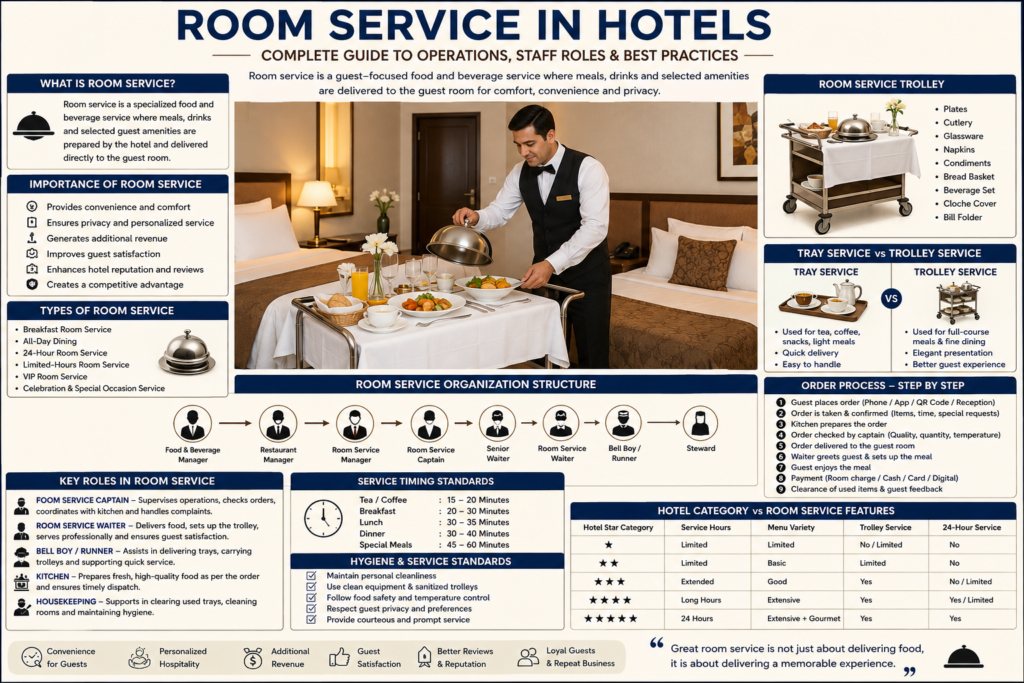
Part 1 – Introduction, Definition, History, Importance, and Types of Room Service
Introduction
Room service is one of the most valuable and guest-focused services offered in the hospitality industry. It allows hotel guests to enjoy food, beverages, and selected amenities without leaving the comfort of their rooms. Whether a traveler wants an early breakfast before a business meeting, a family wishes to enjoy dinner privately, or a guest needs a late-night snack after a long journey, room service provides convenience, comfort, and personalized attention.
In today’s competitive hotel industry, guests expect more than just a clean room and a comfortable bed. They expect fast, reliable, and professional service throughout their stay. Room service has become an important part of this expectation because it combines hospitality, efficiency, and personalized care in one experience.
Modern room service has evolved significantly over the years. Traditional telephone ordering has been complemented by digital menus, mobile applications, QR-code ordering systems, and smart television platforms. Hotels now focus not only on delivering meals but also on creating memorable in-room dining experiences that match the quality of their restaurants.
For hotels, room service is more than a guest convenience—it is a profitable department that contributes to food and beverage sales, enhances guest satisfaction, improves online reviews, and strengthens the property’s reputation. A well-managed room service operation encourages repeat business and helps hotels stand out in a highly competitive market.
This comprehensive guide explains every important aspect of hotel room service, including its history, objectives, service categories, operational procedures, staffing structure, equipment, hygiene standards, technology, and best practices. Whether you are a hospitality student, hotel employee, restaurant professional, or hotel owner, this article provides practical knowledge about how professional room service operates in today’s hospitality industry.
What is Room Service?
Room service, also known as In-Room Dining (IRD) in many modern hotels, is a specialized food and beverage service where meals, drinks, and selected guest amenities are prepared by the hotel’s kitchen and delivered directly to guest rooms.
Unlike a restaurant, where guests visit the dining area, room service brings the dining experience to the guest. This service allows visitors to enjoy restaurant-quality meals in a private, comfortable, and relaxed environment without leaving their accommodation.
Room service generally includes:
- Breakfast
- Lunch
- Dinner
- Evening snacks
- Tea and coffee
- Fresh fruit juices
- Soft drinks
- Desserts
- Bakery products
- Children’s meals
- Diet or health-conscious meals
- Special celebration arrangements
- Beverage service (subject to local laws)
- Complimentary welcome amenities
Many luxury hotels also offer personalized room service options, allowing guests to customize meals according to dietary preferences, allergies, cultural requirements, or religious practices.
The primary objective of room service is to provide convenience while maintaining the same quality, presentation, and hospitality standards found in the hotel’s restaurants.
The Origin and Evolution of Room Service
The idea of serving meals inside guest rooms dates back to the development of luxury hotels in Europe during the late nineteenth century. Wealthy travelers staying in grand hotels often requested private dining instead of eating in public restaurants. Hotel management recognized this demand and gradually developed dedicated in-room dining services.
As international tourism expanded during the twentieth century, room service became an essential feature of luxury hospitality. Five-star hotels introduced twenty-four-hour room service, allowing guests to order meals at any time of the day or night. Business hotels later adopted similar services to accommodate corporate travelers working unusual schedules.
Technological advancements have transformed room service even further. Today, many hotels use computerized ordering systems, kitchen display screens, mobile applications, digital menus, and contactless payment methods to improve efficiency and reduce waiting times.
The COVID-19 pandemic also increased the importance of room service as guests preferred private dining over crowded public spaces. Many hotels expanded their in-room dining menus and introduced contactless delivery methods to ensure guest safety while maintaining service quality.
Today, room service is considered an important part of guest satisfaction across luxury hotels, resorts, boutique properties, serviced apartments, and premium business hotels around the world.
Why Room Service is Important in Hotels
Room service plays a significant role in creating a comfortable and memorable guest experience. It is one of the services that distinguishes full-service hotels from limited-service properties.
Convenience for Guests
Guests can enjoy meals without leaving their rooms, making room service ideal for business travelers, families with children, elderly guests, or anyone wishing to relax after a long journey.
Enhanced Privacy
Some guests prefer eating privately rather than dining in public restaurants. Room service provides a comfortable and peaceful environment for personal meals, business discussions, or romantic occasions.
Personalized Hospitality
Hotels can customize meals according to guest preferences, including vegetarian, vegan, gluten-free, diabetic, low-sodium, or allergy-friendly options. This personalized approach improves guest satisfaction and loyalty.
Additional Revenue Source
Room service contributes significantly to a hotel’s food and beverage income. Premium pricing, special menus, and celebration packages often generate higher profit margins compared to standard restaurant dining.
Improved Guest Satisfaction
Fast, professional, and courteous room service enhances the overall guest experience. Satisfied guests are more likely to leave positive online reviews, recommend the hotel to others, and return for future stays.
Competitive Advantage
Hotels offering efficient room service often gain an advantage over competitors, particularly in business districts, airport locations, and luxury travel destinations where convenience is highly valued.
Main Objectives of Room Service
Every professional room service department works toward several important goals:
- Deliver meals promptly while maintaining food quality.
- Ensure food reaches the guest at the correct serving temperature.
- Provide courteous and personalized service.
- Ensure “Maintain high standards of hygiene and food safety” professionally
- Increase guest comfort and satisfaction.
- Support the hotel’s overall food and beverage revenue.
- Ensure “Create memorable dining experiences that encourage repeat visits” most important part of service
- Handle guest requests efficiently and professionally.
Types of Room Service
Hotels offer different types of room service depending on their category, target market, and operational capabilities.
1. Breakfast Room Service
Breakfast is the most frequently ordered room service meal. Guests often place orders the night before by completing a breakfast order card, calling the room service department, or using the hotel’s mobile application.
Typical breakfast options include:
- Continental breakfast
- American breakfast
- English breakfast
- Healthy breakfast
- Regional specialties
- Fresh fruit
- Tea and coffee
- Fresh juices
Breakfast delivery is especially popular among business travelers with early schedules.
2. All-Day Dining
Many hotels provide an all-day dining menu available throughout the day. These menus include a variety of dishes suitable for lunch, dinner, or light meals between regular dining hours.
Common menu items include:
- Soups
- Salads
- Sandwiches
- Burgers
- Pasta
- Rice dishes
- Grilled items
- Vegetarian meals
- Desserts
- Hot and cold beverages
This service allows guests to order meals whenever convenient.
3. Twenty-Four-Hour Room Service
Luxury hotels often provide round-the-clock room service to accommodate guests arriving at different times due to international flights, business schedules, or personal preferences.
Although the full restaurant menu may not be available overnight, hotels usually offer a carefully selected late-night menu featuring popular dishes and beverages.
4. Limited-Hours Room Service
Many three-star and mid-scale hotels provide room service during specific operating hours rather than throughout the entire day.
Typical service timings may include:
- 7:00 AM to 10:30 PM
- 6:30 AM to 11:00 PM
This approach helps control staffing costs while still meeting guest expectations.
5. VIP Room Service
Hotels provide premium room service for important guests, including celebrities, diplomats, corporate executives, wedding couples, and long-term residents.
VIP room service may include:
- Premium table presentation
- Personalized menus
- Complimentary welcome gifts
- Fine dining equipment
- Priority delivery
- Dedicated service staff
This personalized attention enhances the guest’s overall experience.
6. Celebration and Special Occasion Service
Many hotels offer customized room service for birthdays, anniversaries, honeymoons, proposals, and other special occasions.
These services may include:
- Celebration cakes
- Flower arrangements
- Chocolate platters
- Sparkling beverages
- Decorative room setup
- Candlelight dining
- Personalized greeting cards
- Romantic meal presentations
These experiences create memorable moments and increase guest satisfaction.
Benefits of Professional Room Service
A well-organized room service department benefits both guests and hotels.
For guests, it provides comfort, privacy, convenience, and personalized dining without leaving the room. It is particularly valuable for business travelers, families, elderly guests, and individuals recovering from illness or fatigue.
For hotels, room service generates additional income, increases guest satisfaction, improves brand reputation, supports premium room pricing, and creates opportunities to upsell food, beverages, desserts, and celebration packages. High-quality room service also contributes to better online ratings and encourages repeat business, making it an essential component of successful hotel operations.