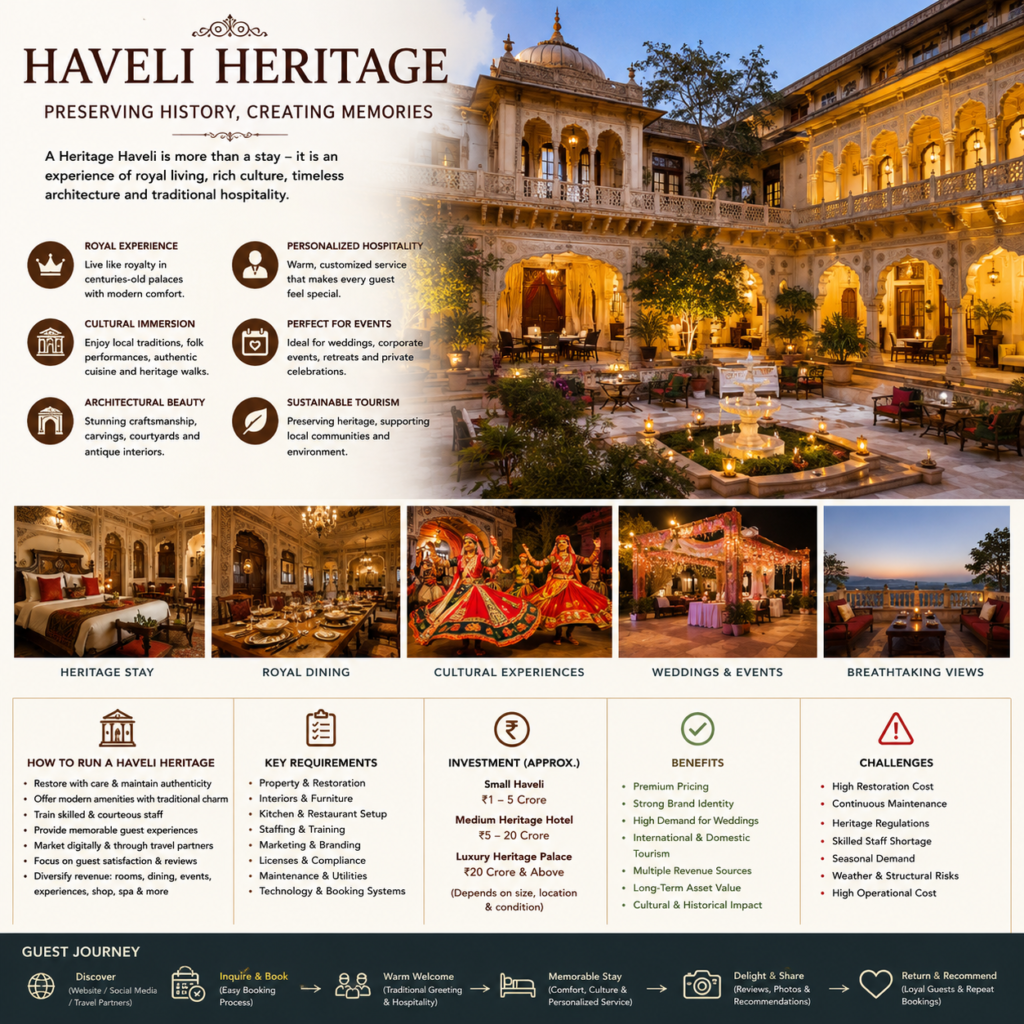
India is home to thousands of magnificent havelis that reflect centuries of history, architecture, art, and culture. These grand mansions, once owned by royal families, wealthy merchants, landlords, and noble communities, have become one of the fastest-growing segments of the hospitality industry. Instead of allowing these historic properties to deteriorate, many owners have transformed them into luxury heritage hotels, boutique stays, cultural resorts, wedding venues, and experiential tourism destinations.
A Haveli Heritage hotel is far more than a place to sleep. Guests choose heritage properties because they want to experience history, traditional architecture, authentic cuisine, local culture, personalized hospitality, and royal living. Unlike modern hotels that focus primarily on comfort and convenience, heritage hotels create memorable emotional experiences.
However, operating a heritage haveli is significantly different from managing a standard hotel. Owners must balance historical preservation with modern hospitality standards. This includes restoring old structures, complying with heritage regulations, maintaining antique interiors, providing contemporary amenities, hiring trained staff, and delivering exceptional guest experiences.
This comprehensive guide explains everything you need to know about Haveli Heritage hospitality, including business planning, investment, operations, staffing, marketing, guest expectations, benefits, challenges, profitability, and long-term success.
What is a Heritage Haveli?
A Heritage Haveli is a traditional Indian mansion converted into a hospitality property while preserving its original architectural beauty, cultural identity, and historical significance.
Most heritage havelis feature:
- Grand courtyards
- Beautiful balconies
- Antique wooden doors
- Stone carvings
- Hand-painted walls
- Decorative ceilings
- Heritage furniture
- Royal suites
- Traditional gardens
- Historic temples or shrines
- Open terraces
- Vintage dining halls
Unlike conventional hotels, every room in a haveli often has a unique design, story, and character.
Why Are Heritage Havelis Becoming Popular?
Modern travelers increasingly seek authentic experiences instead of standardized hotel rooms. Heritage tourism has grown rapidly because people want to immerse themselves in local traditions, architecture, cuisine, and history.
Guests appreciate heritage havelis because they offer:
- Royal lifestyle experiences
- Peaceful surroundings
- Cultural authenticity
- Traditional hospitality
- Unique architecture
- Personalized service
- Historic ambiance
- Local storytelling
- Photography opportunities
- Luxury combined with heritage
International tourists are especially attracted to properties that showcase India’s rich cultural heritage.
Types of Heritage Haveli Businesses
A heritage haveli can operate in several profitable ways.
Luxury Heritage Hotel
High-end accommodation featuring royal suites, fine dining, spa services, and premium guest experiences.
Boutique Heritage Hotel
Smaller properties with limited rooms offering personalized service and cultural experiences.
Wedding Destination
Many havelis generate substantial income by hosting destination weddings, receptions, and celebrations.
Cultural Tourism Center
Properties organize folk performances, craft workshops, heritage walks, and traditional cooking demonstrations.
Heritage Homestay
Families open part of their ancestral haveli for travelers seeking authentic local experiences.
Event Venue
Corporate meetings, retreats, exhibitions, film shoots, and private functions can provide additional revenue.
How to Start a Heritage Haveli Hotel
Property Assessment
Evaluate:
- Structural safety
- Historical value
- Renovation requirements
- Accessibility
- Tourism demand
- Water availability
- Electricity
- Parking
- Government permissions
Professional architects specializing in heritage restoration should inspect the building.
Restoration and Renovation
The objective is to preserve historical charm while adding modern comfort.
Typical improvements include:
- Plumbing upgrades
- Electrical rewiring
- Fire safety systems
- Air conditioning
- Luxury bathrooms
- Wi-Fi
- CCTV
- Solar energy
- Modern kitchens
- Sewage systems
The challenge is integrating these facilities without compromising heritage aesthetics.
Interior Design
Guests expect authenticity.
Use:
- Antique furniture
- Brass décor
- Wooden craftsmanship
- Traditional lighting
- Handmade carpets
- Vintage paintings
- Cultural artifacts
- Local handicrafts
Avoid replacing heritage elements with modern commercial décor.
Investment Required
The investment depends on the property’s condition.
Typical expenses include:
- Property purchase (if not inherited)
- Restoration
- Structural repair
- Roofing
- Furniture
- Kitchen equipment
- Landscaping
- Guest amenities
- Licensing
- Staff recruitment
- Marketing
- Technology systems
Approximate investment categories:
- Small Haveli: ₹1–5 crore
- Medium Heritage Hotel: ₹5–20 crore
- Luxury Heritage Palace: ₹20 crore and above
If the property already belongs to your family, restoration costs may be significantly lower than purchasing new land.
Staff Required
Heritage hospitality depends heavily on exceptional service.
Essential staff includes:
General Manager
Oversees daily operations.
Front Office Team
Handles reservations, guest check-in, and concierge services.
Housekeeping
Maintains cleanliness while protecting antique furniture and heritage materials.
Chefs
Specialize in regional cuisine, royal recipes, and international dishes.
Restaurant Staff
Deliver personalized dining experiences.
Garden Maintenance
Preserve courtyards, fountains, and landscaped areas.
Security
Protect guests and valuable heritage assets.
Maintenance Team
Manage plumbing, electrical systems, carpentry, and restoration.
Cultural Coordinators
Organize performances, heritage walks, and guest activities.
Digital Marketing Executive
Promotes the property online.
Staff Training
Training should include:
- Heritage storytelling
- Guest etiquette
- Cultural sensitivity
- Luxury service standards
- Emergency response
- Fire safety
- Complaint handling
- Upselling techniques
- Local tourism knowledge
- Foreign guest interaction
Staff should become ambassadors of the property’s history.
Guest Experience
Successful heritage hotels create unforgettable experiences.
Guests enjoy:
- Traditional welcome ceremonies
- Flower garlands
- Live folk music
- Welcome drinks
- Heritage tours
- Traditional cooking classes
- Camel or horse rides
- Village experiences
- Cultural performances
- Local festivals
- Royal dining
- Handcrafted souvenirs
These experiences differentiate heritage properties from ordinary hotels.
How to Attract Guests
Guest acquisition requires a strong digital and offline strategy.
Professional Website
Include:
- High-quality photography
- Online booking
- Virtual tours
- Guest reviews
- Blog articles
- Local attraction guides
- Mobile-friendly design
Search engine optimization (SEO) helps improve visibility on Google.
Social Media Marketing
Post regularly on:
- YouTube
Share:
- Restoration stories
- Heritage architecture
- Guest experiences
- Wedding events
- Festivals
- Food
- Behind-the-scenes videos
Visual storytelling is essential.
Online Travel Agencies
List the property on trusted travel booking platforms to increase visibility and attract domestic and international travelers.
Wedding Marketing
Destination weddings are among the most profitable revenue sources.
Collaborate with:
- Wedding planners
- Photographers
- Decorators
- Makeup artists
- Event companies
Offer complete wedding packages.
Travel Agencies
Partner with:
- Tour operators
- Luxury travel agencies
- International travel companies
- Corporate travel planners
Offer attractive commissions.
Influencer Marketing
Invite travel bloggers, photographers, and content creators.
Authentic guest-generated content often attracts more bookings than traditional advertising.
Additional Revenue Sources
Do not rely solely on room bookings.
Generate income through:
- Weddings
- Conferences
- Restaurant
- Café
- Heritage museum
- Gift shop
- Spa
- Cooking classes
- Cultural events
- Photography permits
- Film shooting
- Local handicraft sales
- Festival packages
Multiple income streams improve profitability.
Common Challenges
Operating a heritage haveli presents unique difficulties.
High Restoration Cost
Historic structures require expensive repairs and specialized craftsmen.
Maintenance
Old buildings require continuous maintenance throughout the year.
Weather Damage
Heavy rainfall, humidity, termites, and heat can damage heritage structures.
Limited Modern Infrastructure
Older properties may have:
- Narrow corridors
- Limited parking
- Small bathrooms
- Uneven floors
Balancing heritage with modern comfort requires careful planning.
Skilled Staff Shortage
Luxury heritage service demands experienced professionals.
Continuous staff training becomes essential.
Government Compliance
Owners must comply with:
- Heritage conservation guidelines
- Fire safety regulations
- Building permissions
- Food safety standards
- Tourism department requirements
- Environmental norms
Ignoring compliance can result in penalties.
Advantages of Running a Heritage Haveli
A well-managed heritage property offers many long-term benefits.
Premium Pricing
Guests are willing to pay higher rates for unique experiences.
Strong Brand Identity
Every haveli has its own history and architectural character.
Wedding Business
Destination weddings generate significant revenue.
International Tourism
Foreign visitors actively seek heritage experiences.
High Guest Loyalty
Memorable stays encourage repeat visits.
Cultural Preservation
Owners protect historical architecture for future generations.
Multiple Revenue Opportunities
Rooms, events, dining, tourism, and cultural activities all contribute to income.
Disadvantages
Despite its potential, the business also has limitations.
- High investment
- Expensive restoration
- Continuous maintenance
- Seasonal tourism
- Heritage restrictions
- Operational complexity
- Skilled labor shortage
- Unexpected repair costs
- Insurance expenses
- Long return on investment
Owners must prepare for long-term financial commitment.
Financial Planning
Successful heritage hotels closely monitor:
- Occupancy rate
- Average room revenue
- Food cost
- Payroll cost
- Utility expenses
- Marketing budget
- Maintenance reserve
- Guest satisfaction
- Online ratings
- Profit margins
Monthly financial analysis helps improve business performance.
Sustainability Practices
Modern travelers increasingly value environmentally responsible hospitality.
Implement:
- Solar power
- Rainwater harvesting
- Waste segregation
- Organic gardens
- Plastic-free operations
- Local sourcing
- Energy-efficient lighting
- Water conservation
- Eco-friendly cleaning products
Sustainability reduces operating costs while strengthening the property’s reputation.
Technology in Heritage Hospitality
Technology improves operational efficiency without compromising historical charm.
Useful systems include:
- Property Management System (PMS)
- Online booking engine
- Channel manager
- Digital payment systems
- Smart inventory management
- CRM software
- Guest feedback tools
- Revenue management software
- Security monitoring
- High-speed Wi-Fi
Technology should remain discreet and enhance, rather than dominate, the heritage experience.
Tips for Long-Term Success
To build a profitable and respected heritage hospitality business:
- Preserve authenticity while providing modern comfort.
- Invest in regular maintenance instead of waiting for major repairs.
- Hire staff with a passion for hospitality and local culture.
- Deliver personalized service to every guest.
- Encourage guest reviews and respond professionally.
- Develop strong partnerships with travel agencies and event planners.
- Promote local cuisine, crafts, and traditions.
- Diversify revenue through weddings, events, dining, and experiences.
- Monitor financial performance and control operating costs.
- Continuously innovate while respecting the property’s historical identity.
Is Investing in a Heritage Haveli a Good Business?
A Heritage Haveli can be an excellent long-term investment for entrepreneurs who appreciate history, hospitality, and cultural tourism. Although the initial investment and restoration costs can be substantial, a well-managed property has the potential to generate consistent income through accommodation, destination weddings, events, dining, and cultural experiences.
Success depends on preserving the haveli’s authenticity while meeting modern guest expectations. Owners who focus on exceptional service, effective digital marketing, heritage conservation, and memorable guest experiences are more likely to build a strong reputation and achieve sustainable profitability.
Frequently Asked Questions (FAQs)
1. What makes a heritage haveli different from a regular hotel?
A heritage haveli preserves historical architecture, cultural traditions, and unique design while offering modern hospitality services, creating an experience rather than just accommodation.
2. Is a heritage haveli business profitable?
Yes. With good occupancy, destination weddings, events, dining, and tourism activities, it can generate strong long-term profits, although it requires significant upfront investment and ongoing maintenance.
3. How much investment is needed?
The investment varies based on property size and condition. A small restored haveli may require ₹1–5 crore, while luxury heritage properties can cost ₹20 crore or more.
4. What type of guests stay in heritage havelis?
Domestic and international tourists, honeymoon couples, families, photographers, history enthusiasts, wedding guests, corporate groups, and luxury travelers commonly choose heritage stays.
5. What are the biggest challenges?
Major challenges include restoration costs, maintenance, heritage regulations, finding skilled staff, seasonal demand, and preserving authenticity while providing modern comfort.
Conclusion
Heritage Haveli hospitality is much more than a hotel business—it is the preservation of history, culture, architecture, and traditional Indian hospitality. Guests are not just paying for a room; they are investing in an unforgettable cultural journey filled with stories, craftsmanship, local cuisine, and royal experiences.
While this business requires patience, substantial investment, and continuous maintenance, it offers exceptional opportunities for premium pricing, destination weddings, experiential tourism, and brand differentiation. Entrepreneurs who combine heritage conservation with professional hospitality management, digital marketing, and outstanding guest service can build a sustainable, respected, and highly profitable heritage hospitality business for generations to come.